1.1 Knowledge of the Principles of Lifelong Learning
1.1.1 are well informed about information literacy theory and practice
& 3.3.2 promote and nurture 'whole school focus' on information literacy policy and implementation
Our college uses the ILPO system - Information Literacy Planning Organiser (Capra, S & Ryan, J. 1999). This program sets out sequential steps in gaining Information Literacy skills from Prep to Year 12. We have set up a Microsoft Excel document in order to map the progress from Prep to Year 12. The key aspects of ILPO are:
1. The Information Process
- Defining - the question or issue
- Locating - using print or digital resources
- Selecting/analysing
- Organising/synthesising - putting the information to work
- Creating/Presenting - using the most effective method
- Evaluating and identifying future learning needs
2. Critical Thinking and Problem Solving
3. Information Technology Skills
4. Process Skills
The ILPO document used by the Teacher Librarians has been modified to include digital literacy skills such as evaluating websites and protecting privacy online. The document is linked here and it shows the specific skills and the corresponding year levels that they are introduced.
Year 8 i-create classes are taught exclusively by me. This subject is a blend of information literacy, digital literacy and ICT skills. I also promote reading wherever possible. The subject outline is attached here, and the second page is an adaptation of the 21st Century Skills Framework - Adapted for Libraries (Institute of Museum and Library Services, 2009). Covering all of the proposed content in one 50 minute lesson per week was not possible. Some topics were covered well, but others not at all. A decision has been made by the school administration team to extend Year 8 i-create to two 40 minute classes per week. One class will cover Information Literacy, Promotion of reading and literature, and homework & study skills as per the Student Study Planner and workbook. A powerpoint introducting the subject to the students is found in section 2.4.4.
The other class will concentrate on:
Digital Literacy and ICT skills
Performing tasks effectively in a digital environment.
- Creating with ICT – e.g. digital storytelling
- Communicating with ICT – emails, wikis, blogs
- Inquiring with ICT – effective database and web searching, evaluating websites
- Operating ICT – programs, applications, websites, emerging technology
- Ethics, Safety and Legal Issues – copyright, Cybersafety, cyberbullying, ‘Digital Footprint’, Netiquette
Visual Literacy
- Making meaning from graphics and images
- Creating graphics and images to communicate meaning
- Concept mapping
Includes: Graphic organisers, digital concept mapping, data visualisation, infographics.
2011 - A successful project - Book Trailers
After successfully completing my first book trailer in CLN646 I prepared a book trailer unit for the final part of Term 4 2011. The Year 8s do not have laptops and their ICT skills are not as developed as students in Year 7. To ensure success I scaffolded the project with a series of activities, planning sheets, links and checklists. They were also able to work collaboratively in pairs if they preferred, and had free choice of the book for their trailer. Then end results included everything from 'Where the Wild Things Are' to 'The Hunger Games'. The basic steps were:
-
Viewing, analysing and rating book trailers both professionally produced and student produced.
-
Viewing a clear and concise rubric describing desired outcome and quality of the trailer
-
Selecting an appropriate book and establishing the audience
-
Preparing a storyboard
-
Gathering the images, music, sound effects
-
Writing the narration or text to appear on the screen
-
Organising the credits
-
Using photostory, animoto, windows movie maker or imovie to create the trailer
-
adding the credits and acknowledgements
-
Assessing their trailer according to the rubric
-
Viewing the trailers.
The project was challenging but the students enjoyed the process very much. They worked collaboratively and assisted each other towards completion. Whilst the book trailer project was intended to encourage a love of reading, and to promote books to other students, a number of desired skills were being developed. Mark Staines (Ed Qld Library Services eLearning Branch) and Adrian Greig (Smart Classrooms ICT Learning Innovation Centre eLearning Branch) in their 2009 ICT Expo presentation explained the learning that was taking place:
Students...
-
construct media texts
-
manipulate images, sounds and words
-
reflect on and describe the effectiveness of language elements
-
entertain, inform and describe when writing and designing
-
plan, draft, revise, edit, proofread, publish and reflect
2011 - A disappointing project - Animation
This unit was to be part of a digital storytelling focus for Year 8 i-create. Students were introduced to Sumopaint (for backgrounds), avatar websites including Doppleme, Build Your Wild Self and Doll Devine and animation websites including goanimate and Stykz. Unfortunately the Stykz program the IT Dept provided didn't allow students to save anything they made and Goanimate was plagued with problems, particularly our slow bandspeed at the time that meant little was accomplished withing lessons. The students enjoyed using the 'remove backgrounds' feature in Word and made some short powerpoint presentations with characters superimposed on backgrounds. Even with the improvements in our band speed I will not run this unit again next year. The Book Trailer project was considerably more successful, with the promotion of books being addressed creatively.
1.1.2 thoroughly understand how all learners develop and apply lifelong learning skills and strategiesI understand how learners develop and apply lifelong learning skills and strategies and I role-model my own learning during lessons. I encourage students to teach each other and to teach me. When working on assignments over the past few years I have included students in my research and explained what I was learning in my course. When preparing for the Book Trailer assignment and essay for Children's Literature I read the book I was using to classes of students in Years 5, 6, & 7 as well as asked students to read the book independently. I prepared questions and recorded student responses to 'I am Thomas' by Libby Gleeson. I also used the I am Thomas book trailer in the Year 8 i-create viewing and analysing book trailer sessions that introduced the Book Trailer Project.
I encourage students to pursue lines of enquiry and assist students to access the skills and knowledge they require. I promote peer to peer tutoring and use collaborative processes where possible. I work to equip students with the ICT and thinking skills required to succeed and experience happiness in the 21st century.
1.1.3 have a sound understanding of how children and young adults become independent readers
My original teacher training began in 1977 and I have actively sought out the best strategies to help children and young adults become independent readers. The Graduate Diploma in Learning Support I completed in 2001 gave me a wealth of knowledge to assist students who were struggling to read or had reading or learning difficulties. I experiment with new strategies to encourage a love of reading and an appreciation of literature for all students. Some of these strategies are outlined later in this Portfolio.
1.1.4 comprehensively understand the role of ICT in lifelong learning
Throughout this portfolio there are descriptions of the ways in which I use ICT to facilitate teaching and learning.
1.2 Knowledge of Learning and Teaching
1.2.1 - have a detailed knowledge of current educational pedagogy
1.2.2 - are thoroughly familiar with the information literacy and information needs, skills and interests of learners
1.2.3 - fully understand the need to cater for the social, cultural and developmental backgrounds of learners in program implementation and curriculum resourcing
Throughout my years as a classroom teacher and an Acting teacher librarian I have attended many Professional Development workshops, seminars and conferences covering the three points listed above. I have stayed abreast of the latest trends and movements in my everyday work life and through my Grad Diploma and Masters Degree. Recently our school has focussed on educational pedagogy through the formation of Learning Teams. I was approached to be a Learning Team facilitator and some of the content we covered this year is detailed in Section 3.1.3 of this portfolio.
1.3 Knowledge of Curriculum
1.3.1 – Have a comprehensive understanding of literacy, literature for children and young adults, curriculum and specific programs in their schools
In late 2009 I was able to attend the five day intensive 'Keys to Literacy' training compulsory for all Education Queensland teachers. This refreshed previous knowledge acquired through my Diploma of Teaching and Grad Dip Learning Support. Our school was also a centre for Literacy Professional Development and I was able to attend many workshops conducted by visiting literacy professionals such as Kath Murdoch and David Hornsby. Full details of Professional Development attended is found here.
1.3.2 Promoting and fostering a love of reading
I wrote about many strategies I use to promote and foster a love of reading in SPP Portfolio Part 1. Since that time, and in a new environment where I also work with secondary students, more complex issues have emerged. After reading The Sledding Hill by Chris Crutcher as part of the Children’s Literature unit, I became more aware of the issue of censorship – especially restricting students from reading stories that speak to them so clearly. I’ve arranged to purchase a copy for our library and look forward to the discussions that will follow as each staff member reads it.
Our Learning Centre is divided into JF (P – Yr 3), PF (Yr 3 – 6), MF (Yr 7 – 9), SF (10 – 12) and AF (Adult Fiction - for staff and parents). It was possible for students in Years 4 - 6 to read from the MF section as long as their parents signed a permission letter. Likewise a student from Years 7, 8 & 9 could read from the SF section with a permission letter. We were finding that students were pushing to have their parents sign the letter as a form of status symbol, regardless of their reading level or social maturity. At the same time the books we were adding to the collection seemed to contain more mature themes and graphic violence than in the past. After discussions with teachers and school leaders the system has been changed so that only Year 6 can access MF with a permission note, and Year 9 can access SF with a signed note. Staff and students can request that titles be reconsidered for a younger category e.g. Lemony Snicket was moved from MF to PF, and this system seems to be working.
In hindsight I still agree with Years 4 & 5 being excluded from reading MF but I regret excluding Year 8 students from accessing the SF shelves. I have promoted reading heavily with the Year 8s in 2011 but two main barriers thwart my efforts. The first one is that more than 50% the titles the students choose to read independently from book stores or public libraries are shelved in our SF section. They do not understand why they cannot access these books in their own Learning Centre. They roll their eyes when I explain the content is too mature or the book is too violent. My pleas to allow Year 8 to borrow from SF with parental permission have not been successful. As a result almost every week now I bring a list of books to the staff meeting for reclassification from SF to MF. I use Ed Qld’s Library Services Classroom Resource Reviews suggested reading ages plus information from a website called ‘Commonsense Media’ that advises parents and teachers of suitable viewing and reading ages for movies and books. The example here is for 'Matched' by Ally Condy.
The other obstacle to student borrowing is the insistence that students must carry their ID card with them. Originally this was due to identification issues to prevent students borrowing under another student’s name. Now that Libcode includes a photograph of each student on their borrower record page there is no further issue with identification. Through my efforts there is a system where students are given two chances if they don’t have their card with them.
Since working at my current school there have been no parent complaints about books. The Learning Centre policy includes a form called ‘Request for Reconsideration of Resources’ to be completed by anyone challenging a book from our library. I’ve copied the questions that need to be completed below. This form ensures the person making the complaint has identified all aspects of their concern, and how they would like to see the resource addressed.
The Learning Centre staff and I have a range of strategies we use to promote and foster reading. Some of these are detailed in Section 2.1.3.
Others include:
Mobile Library Van Visit
Over the years I have developed a strong working relationship with the Regional Library staff. Through this I am able to tap into events and opportunities that benefit the children at our school and help to build a culture of positive reading habits. It is my great good fortune that my friend Beth drives one of the Regional Mobile Library Vans. After dealing with all the red tape and protocols we arranged for the van to park out the front of the school after the last school buses left in the morning. I spent weeks gearing up the students by introducing the 'Kids Card' and having their families complete the forms to either join the library or have the new kids' card issued. I delivered dozens of these forms to the Young People's Librarian at the Local branch and she arranged for the new cards to be issued and delivered by the Mobile Van on the day of the visit. Some families took the opportunity to sign up all their children. The van was only able to stay for two hours but in this time three Year 4 classes and one Year 8 class visited. The students loved exploring the van and were amazed at how much it had to offer. Being November the timing was perfect to enable children to borrow from the van that stops in various areas on a weekly timetable. This visit was a great success and was enjoyed by the three Regional Staff, our staff and most importantly - the children. Although Beth no longer drives the Mobile Van I will arrange for another visit at the end of 2012. Further photos are in the Photo Gallery at the end of the Portfolio.
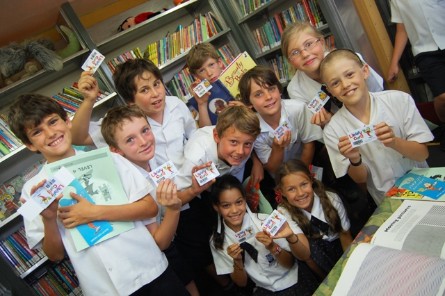 | 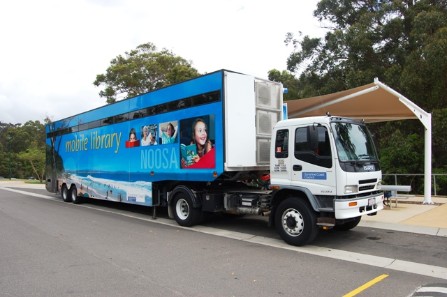 |
Staff Reader Profiles
One idea I implemented last year saw some interesting results. I emailed all staff and asked them whether there was a favourite author, series or particular book that 'turned them onto reading' when they were children or teenagers. I explained I would be making a presentation of their responses to show the Year 7 & 8 students, the idea being that by learning a little about their teachers' reading habits may encourage those reluctant readers who had not yet embraced reading for pleasure. Fortunately some of the teachers who responded were perceived by students as positive role models.
The Powerpoint went over well with the secondary students and we found we had a waiting list for 'Day of the Triffids' by John Wyndam and 'Dune' by Frank Herbert. Recently I showed the Powerpoint to the Year 6 classes and the response was even more positive than I could have hoped for. Students were very engaged, copying down titles and adding the Willard Price adventure titles to the reservation list. As a result of this I will show staff the end product with a view to new and different staff contributing their experiences. I also plan to approach the very popular groundsmen and other staff around the school for their favourites.
1.1.3 Have a sound understanding of current assessment theory and processes
Throughout my career and through my continued tertiary studies and professional development sessions I have kept current with assessment theory and processes. This year our teachers focussed on developing high quality rubrics for each assessment piece and the one I developed for the Book Trailer Project is contained in Section 1.1.1 (above).
1.4 Knowledge of Library and Information Management
1.4.1 - understand that professionally managed and resourced school libraries are crucial to the achievements of the school community
Our school has a comprehensive Learning Centre Policy that covers every aspect of the Learning Centre's management and protocols. The full document can be accessed here.
The Learning Centre's Mission statement:
Mission
To create an environment in which students are provided with positive and enriching experiences whilst gaining the skills of independent research, strategies of lifelong learning and an appreciation for and enjoyment of literature.
The Learning Centre:
- Provides for resource based teaching and learning in all curriculum areas
- Encourages the development of the skills of independent research and lifelong learning
- Caters for the recreational needs of the students of ................... Anglican College
- Promotes a love of literature.
Through setting out my Portfolio using the ASLA standards for Professional Excellence for Teacher Librarians I have become confident that I have a full understanding of the standards attached to the Profession. Using texts such as Learning For the Future (Curriculum Corporation) has ensured I am familiar with all aspects of information and library management. I also read many blogs and websites such as The Hub to keep myself informed, and I followed the Government Inquiry into School Libraries and Teacher Librarians in Australian schools. Subscribing to OZ_TL and QLD TL keep me in touch with the latest developments and initiatives as they arise. My involvement with SLAQ as the Sunshine Coast Councillor also assists me to remain knowledgeable. I also assist SLAQ by acting as photographer at meetings and events - the photo on the Sunshine Coast page was taken by me at one of our PD days.
1.4.3 - have a comprehensive understanding of national standards for information retrieval
Having just completed INN533 I now have a comprehensive understanding of national standards for information retrieval. Our school uses SCIS and the Senior Library Aide has taught me the basics and assisted me as I explored the site. Previously I manually catalogued using Alice for many years so have a full working knowledge of cataloguing using this software. Our school uses Libcode and I have learned most of the features over the past two years.

